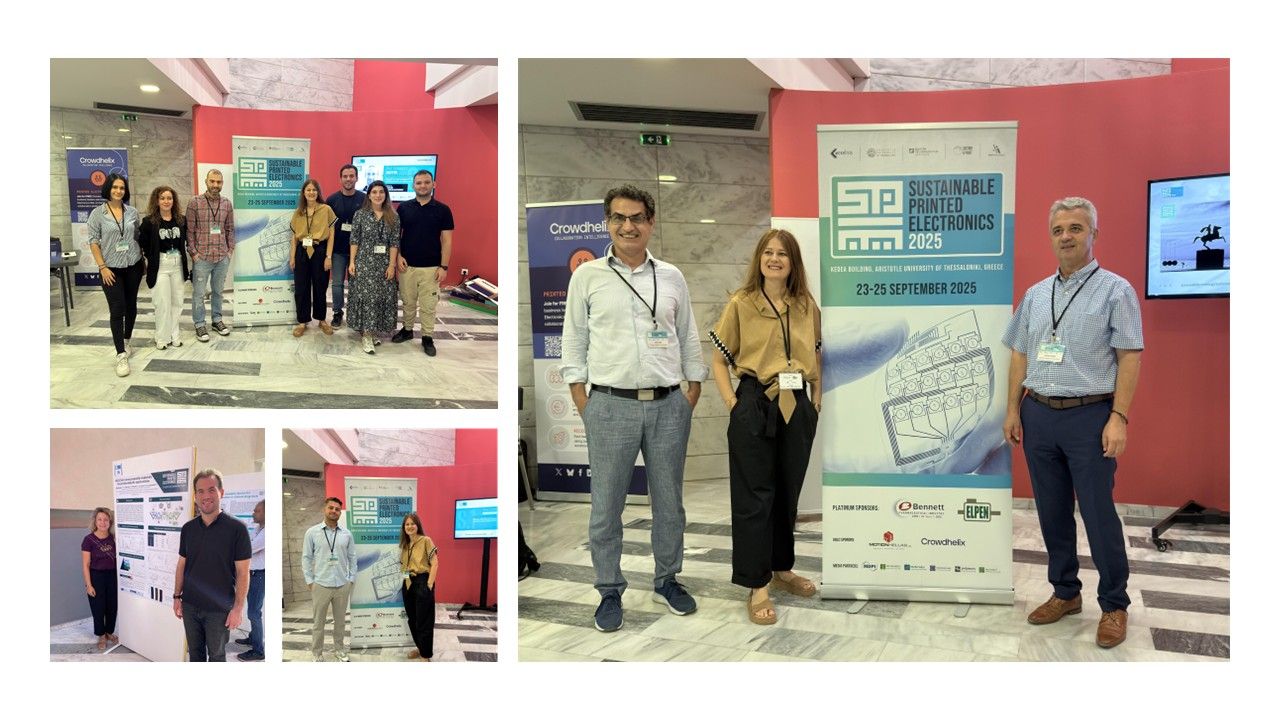
The SPECTRA project team from the Aristotle University of Thessaloniki (AUTH) was proud to participate in the SPE 2025 – Sustainable Printed Electronics conference, hosted by Professor Dimitrios Bikiaris at the Aristotle University of Thessaloniki (AUTH).
This forward-looking event brought together leading researchers, innovators, and industry stakeholders to share knowledge and explore the latest breakthroughs in sustainable materials, technologies, and circular approaches for printed electronics.
Printed electronics (PE) are becoming increasingly integrated into everyday products — from flexible displays and wearable sensors to smart packaging, home appliances, and energy harvesting devices. However, with less than 40% of electronic waste currently being recycled in the EU, SPE 2025 highlighted the urgency of developing PE systems that are reusable, recyclable, and based on biobased and biodegradable materials.
During the conference, attendees examined cutting-edge advancements supporting low-cost and large-scale sustainable manufacturing. Presentations showcased progress in areas such as conductive nanocomposites, carbon dots, nanoparticles, and environmentally friendly polymeric substrates — each designed to enhance durability, recyclability, and performance.
A major focus was placed on new high-performance inks incorporating biobased components like sustainable adhesives and solvents that enable easier recovery of valuable materials, including precious metals. Several speakers addressed primary, mechanical, and chemical recycling solutions, including innovative on-demand de-bonding techniques that facilitate disassembly and reuse at end-of-life.
The programme also featured demonstrations of printed, flexible, and stretchable devices that could revolutionise applications in consumer electronics, healthcare, and smart sensing. Importantly, the integration of Safe and Sustainable by Design (SSbD) methodologies and circular economy principles featured throughout discussions — ensuring that technological progress is aligned with environmental responsibility and future regulatory requirements.
By actively contributing to these conversations, the SPECTRA team further strengthened its commitment to developing greener innovation pathways. The conference concluded with a shared ambition to accelerate sustainable transformation in printed electronics — ensuring the next generation of PE technologies is not only smarter, but truly sustainable across their full life cycle.