What’s Left Behind
Run an antibiotic through a treatment process and the obvious question is whether it disappeared. The more interesting question, the one Eleni Evgenidou and her colleagues actually asked, is what it turned into on the way out.
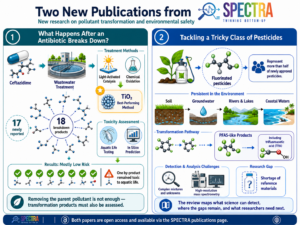
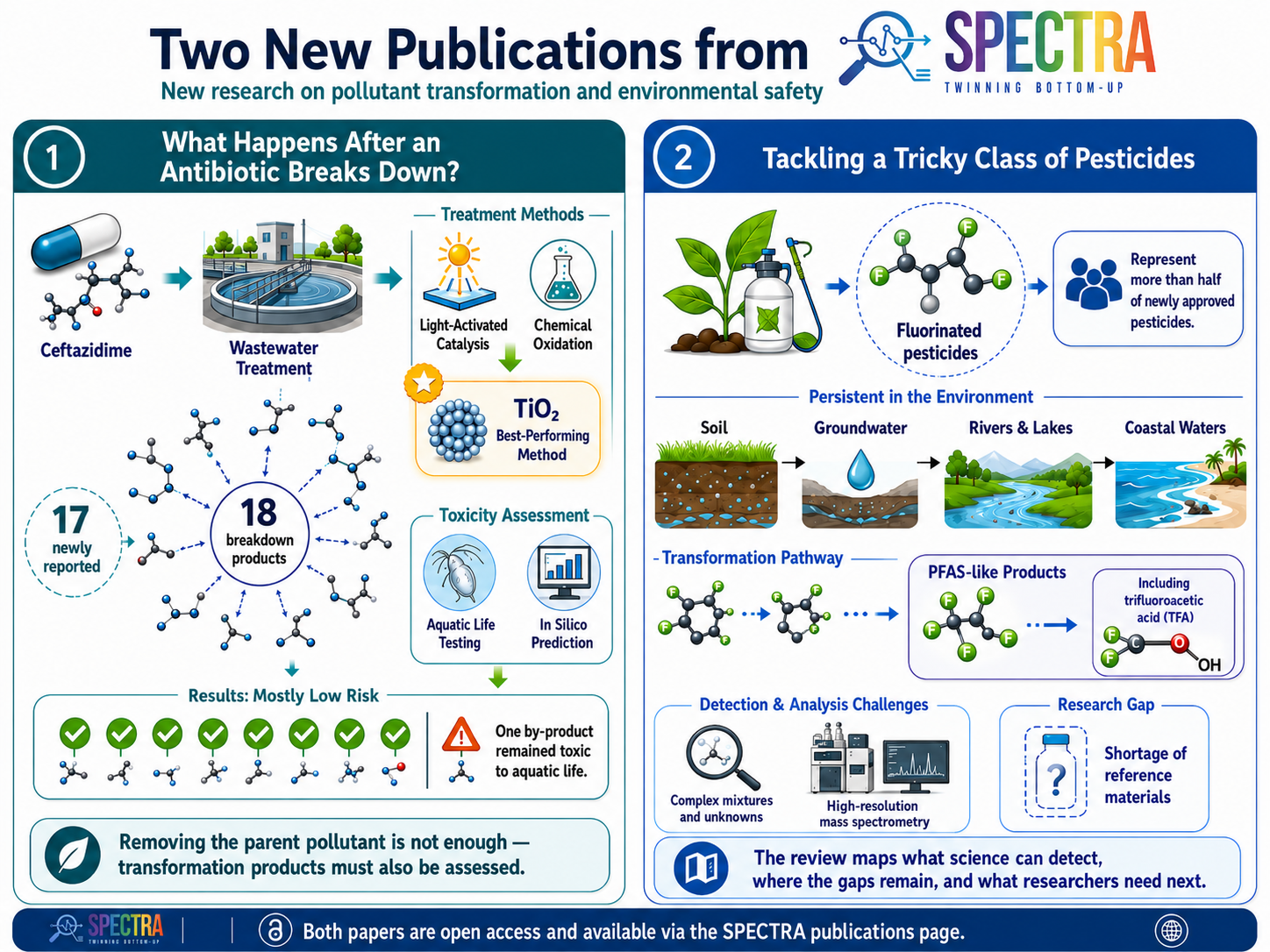
Ceftazidime is a widely used antibiotic with a habit of slipping through wastewater treatment intact. Evgenidou, working with Panagiotis Pavlidis, Androniki Rapti, Lelouda-Athanasia Koronaiou, Vasileios Alampanos and Prof. Dimitra Lambropoulou, tested several ways of breaking it down, from light-activated catalysts to chemical oxidants, and then tracked exactly what each method left behind. Most studies stop at the first question. This one didn’t.
Using highly sensitive lab equipment, the team identified eighteen different breakdown products, seventeen of which had never been reported for this antibiotic before. Titanium dioxide came out on top, clearing the antibiotic completely within an hour.
The breakdown products themselves told a more complicated story. Tested against small water-dwelling organisms and run through computer-based toxicity predictions, most turned out to pose little risk. One didn’t. It appeared only under a specific treatment method and retained real toxicity to aquatic life – a reminder that a process can look like a clean success on paper while quietly leaving something worse behind.
A Pesticide Problem That Won’t Stay Put
A second paper, by Vasileios Alampanos and Prof. Dimitra Lambropoulou, steps back from the lab bench to take stock of a wider problem: fluorinated pesticides, now well over half of all newly approved pesticide products.
Farmers favour them for the same reason chemists worry about them. They’re stable. They last. And some break down into compounds that behave a lot like PFAS, the so-called forever chemicals already turning up in rivers, lakes, groundwater and coastal waters worldwide. Trifluoroacetic acid is one of them, and it’s no longer rare to find.
Rather than reporting new experiments, the paper draws together what’s already known about detecting these substances and their breakdown products, where the methods hold up, and where they still fall short, particularly the shortage of reference materials researchers need to confirm what they’re actually looking at. For anyone working in this field, it’s a useful map of where things currently stand.
Read Them Both
Both papers are open access via Zenodo, free to read in full, no login required. You’ll find them alongside SPECTRA’s other publications on the project’s publications page.
https://spectra-project.eu/publications/
Visit the publications page: https://spectra-project.eu/publications/